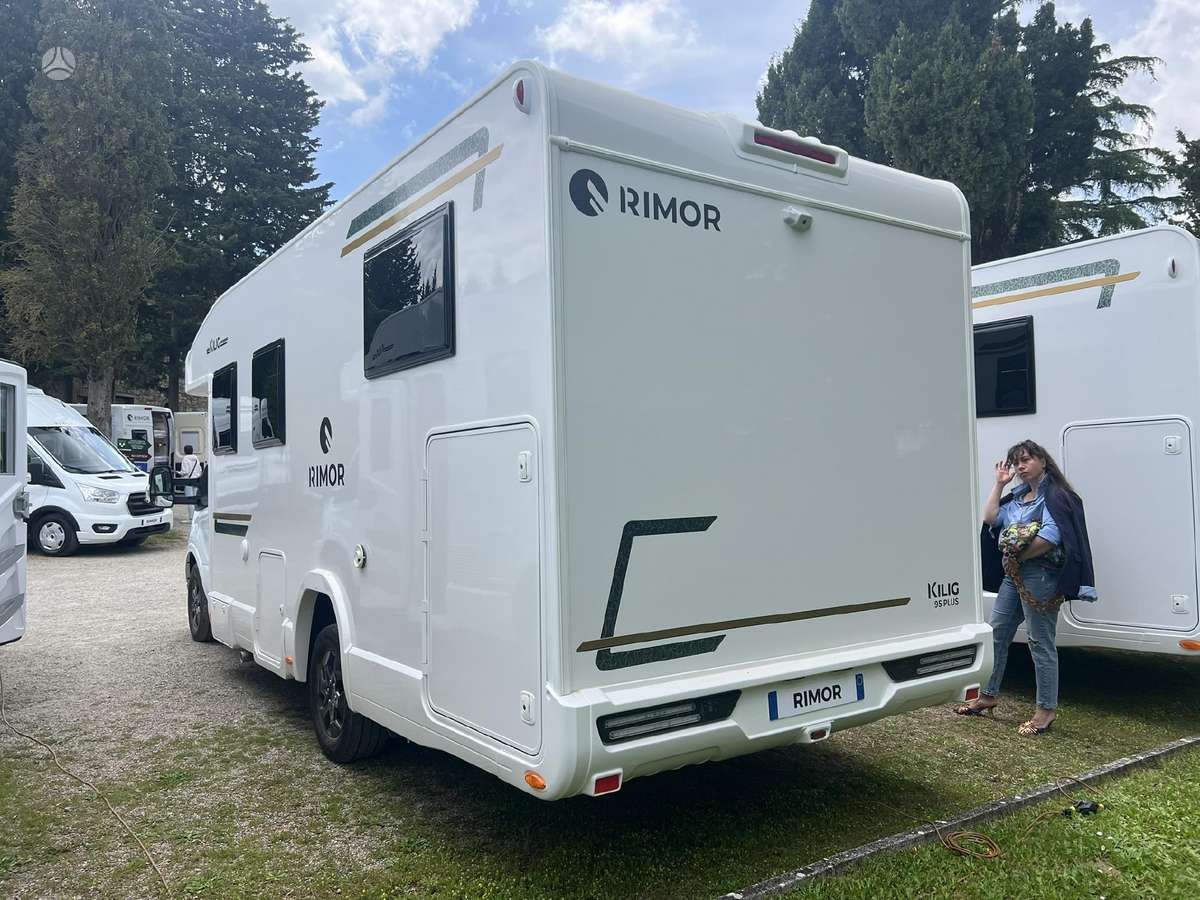
Author: the Puikūs Kemperiai team · Updated: 2026-07-03
Four steps are enough to prepare for your first camper trip: choose a camper of the right size for the number of travellers and the category of your driving licence, learn the three main systems (water, gas and electricity) when you take over the camper, plan your overnight stays at campsites in advance and pack according to a checklist. For most beginners the most common mistake is not the driving but the day-to-day living: not having found out how to fill the fresh water tank or empty the waste water. Below is what to sort out before you get behind the wheel of a camper for the first time.
The essentials up front
- A category B driving licence is enough for campers up to 3500 kg – this covers most rental models.
- You must understand three systems before you set off: the fresh water and waste water tanks, the gas bottle (for the hob and heating) and the electricity (12V while driving, 230V at a campsite).
- Book your overnight stays in advance in the peak season (June–August) – the most popular seaside campsites fill up.
- Plan a shorter first trip: 2–3 nights and no more than 200–300 km a day, so that you have time to get used to it.
1. Before booking: what size of camper you need
The size of the camper depends on two things: how many people are travelling and what driving licence you hold.
The Road Traffic Rules of the Republic of Lithuania provide that a category B driving licence allows you to drive vehicles with a maximum permissible mass of up to 3500 kg. Almost all rental campers fall within this limit, so in most cases no additional category is needed. If you plan to travel in a larger vehicle weighing more than 3.5 tonnes, you will need category C1. Driver category requirements are also handled by the state enterprise Regitra. If you are still choosing the type of camper, you will find a broader guide here: which camper suits a trip around Europe.
| Number of travellers | Recommended type | Sleeping places |
|---|---|---|
| 1–2 people | Compact van-type camper | 2 |
| 3–4 people | Semi-integrated camper | 4 |
| 4–7 people | Family semi-integrated with a loft bed | 5–7 |
When choosing, look not only at the number of sleeping places but also at the number of seats with seat belts – while driving, all passengers must sit with their belts fastened.
2. The camper systems you must understand
Unlike a car, a camper runs several self-contained systems. When you take over the camper, ask to be shown each of them in practice.
Water system. A camper has two tanks: fresh water (which supplies water to the sink and shower) and grey water (where used water drains). You fill up with fresh water at campsites or at filling stations with water points, and you empty grey water only at designated places.
Gas system. The gas bottle powers the hob and often the heater and fridge as well. Learn how to open and close the gas valve – the gas is usually turned off while driving.
Electrical system. While driving, the onboard equipment runs off a 12V battery. At a campsite, once you plug into an electric hook-up post, you get 230V, so you can use household appliances and charge the battery.
Chemical toilet. Most campers are fitted with a chemical toilet with a removable cassette. It needs to be emptied regularly at the designated places at campsites and topped up with a special fluid.
Heating and cooling. Most campers have a heater, so it stays warm inside on cooler evenings even in the shoulder season. Heating usually runs on gas or electricity, while on hot days the window blinds and roof lights help. If you are travelling outside summer, check in advance what heating system is fitted in the particular camper.
3. Checklist: what to take
It is easiest to pack by category. Below is a checklist you can print out.
| Category | What to take |
|---|---|
| Documents | Driving licence, identity document, camper rental contract, insurance |
| Kitchen | Crockery, utensils, a sharp knife, a sponge, eco-friendly washing-up liquid, bin bags |
| Sleep | Bedding or sleeping bags, pillows, an extra blanket for cold nights |
| Hygiene | Towels, shower flip-flops, toilet paper, chemical toilet fluid |
| Electricity | Extension lead for the 230V hook-up at the campsite, phone chargers, USB adapter |
| Travel | Torch, first-aid kit, spare footwear, raincoat |
| Food | Long-life products, water, coffee/tea, spices |
Do not overdo the amount you bring: in a camper every kilogram and every cupboard has a limit. Pack what you will really need for the first 2–3 days and top up the rest of your supplies along the way.
4. When is the best time to travel by camper in Lithuania
The camper season in Lithuania divides into three periods, and they determine the weather, the rental price and how busy the campsites are.
| Season | Period | What to expect |
|---|---|---|
| Peak season | June–August | Warmest weather, all campsites open, highest demand and prices – you need to book in advance |
| Shoulder season | April–May and September | Cooler evenings, lower prices, emptier campsites – convenient for beginners |
| Off-season | October–March | Cold, some campsites closed, good heating needed – better suited to experienced travellers |
For a beginner the most relaxed first trip is in the shoulder season. The weather is still favourable and there are fewer people at the campsites, so it is easier to manoeuvre and adjust to life in a camper. A trip in the peak season is enjoyable thanks to the warm weather, but you need to book early and accept bigger crowds at popular spots.
5. Planning overnight stays in Lithuania
For staying overnight in a camper it is best to choose equipped campsites – they have electric hook-up posts, water points and waste disposal points. In the peak season the most popular campsites by the sea and lakes fill up quickly, so book your pitch in advance.
When planning your route, follow a few practical rules:
- Do not drive too far. It is worth limiting your first trip to 200–300 km a day, so that you have time for stops and everyday chores.
- Arrive at the campsite before dark. Manoeuvring and plugging into the post for the first time is easier in daylight.
- Check the rules on wild camping. Staying overnight just anywhere is not always allowed, so the safest choice is official campsites or designated parking areas.
6. How much your first camper trip costs
The trip budget is made up of more than the rental price. When planning, take all the components into account so that there are no surprises at the end of the trip.
| Cost item | What it covers |
|---|---|
| Rental | The camper rental price per day; higher in the peak season |
| Fuel | A camper uses more fuel than a car because of its greater mass |
| Campsites | The overnight fee is charged per day, often plus a fee per person and for electricity |
| Gas | A bottle for the hob and heating; it rarely runs out during a single trip |
| Toilet maintenance | Chemical toilet fluid for the cassette |
| Food | Cooking in the camper is cheaper than eating in cafés |
| Extras | Deposit, additional insurance, road tolls when travelling abroad |
Rental and fuel make up the largest part of the budget. If you cook in the camper and choose the shoulder season, the trip costs noticeably less than travelling at peak time and eating out.
With Puikūs Kemperiai, the rental price starts from 95 EUR per day in the off-season, 115 EUR per day in the shoulder season and 160 EUR per day in the peak season, and the daily price is lower for longer rentals. When you take over the camper, you pay an 800 EUR deposit, which is returned once the camper is handed back in good order, clean and with full tanks. Comprehensive (KASKO) insurance is included in the rental price; the excess is 800 EUR.
The price is “all inclusive”: besides insurance, it includes a 100-litre water tank, a hob, a fridge, a shower and WC, an outdoor awning, insect screens on the windows, outdoor furniture and a bike rack. If needed, the camper can be delivered and collected in any Lithuanian city – Vilnius, Kaunas, Klaipėda, Šiauliai or Panevėžys. This saves you driving extra kilometres just to collect the camper.
7. A sample three-day route for beginners
A short route with modest distances suits a first trip. A route like this lets you get used to the camper without tiring yourself out on long drives. An example in Lithuania:
Day 1: Vilnius – Trakai (about 30 km). A short distance on the first day lets you calmly try out the systems and manoeuvring. Overnight at a lakeside campsite, with the evening for a walk and getting to grips with camper life.
Day 2: Trakai – Kaunas Reservoir (about 100 km). A longer but still comfortable drive with a stop along the way. Overnight at a campsite by the reservoir.
Day 3: Kaunas Reservoir – Vilnius (about 100 km). The return journey with a stop in Kaunas, and the camper is returned to the rental company.
If you would rather head to the seaside, the distances are greater – it is about 300 km from Vilnius to Palanga, so allow at least four days for such a trip so that you do not have to rush.
8. Before you set off: checks when taking over the camper
When you take over the camper from the rental company, set aside time for the briefing. This is where most of a beginner’s uncertainties get resolved.
Ask to be shown, and try these yourself:
-
How to fill and empty the water tanks.
-
How to open the gas valve and light the hob and the heater.
-
How to connect the camper to a 230V electric hook-up post.
-
How to remove and empty the toilet cassette.
-
Where the spare wheel, fire extinguisher and emergency tool kit are.
-
What to do in the event of a breakdown and which number to call.
Before signing the handover report, inspect the bodywork, record any existing scratches in photos and check the tyres and lights.
9. First-trip tips for beginners
- Practise manoeuvring. Before leaving the car park, try reversing – a camper is longer and has a wider blind spot.
- Watch the height. Remember the camper’s height and avoid low underpasses, filling station canopies and branches.
- Drive smoothly. Because of its greater mass a camper needs a longer braking distance, and crosswinds are felt more than in a car.
- Tidy up before you drive. Before moving off, make sure the cupboards are closed and loose items are put away – otherwise they will slide around while you drive.
- Do not forget to rest. A camper is meant for slower travel, so plan stops and do not chase kilometres.
From Puikūs Kemperiai’s experience
We rent out campers throughout Lithuania, we have 28 years of experience in this field and our fleet consists of 29 campers, so we see customers’ first trips almost every day. A few observations that save a beginner the most trouble:
- It is not the driving that causes confusion, but the day-to-day living. People most often get stuck on handling waste water and fresh water, so when the camper is handed over we ask the customer to fill and empty the tank themselves at least once – that way most of the questions disappear on the spot.
- An overly ambitious route is often chosen for a first trip. People used to a car underestimate how everything happens more slowly in a camper: stops, manoeuvring and daily chores take more time than it seems.
- It is worth choosing a model by its seats, not its sleeping places. Before collecting the camper, think about how many people will be travelling with seat belts – this often changes the choice.
When you take over any of our campers, we give a thorough briefing and stay reachable by phone throughout the trip, so even a first trip is never left without help.
Frequently asked questions
What driving licence do you need for a camper?
For most rental campers a category B driving licence is enough, because they weigh up to 3500 kg. Vehicles weighing more than 3.5 tonnes require category C1.
Is it hard to drive a camper for the first time?
No, if the camper falls within category B. It drives much like a larger car; you just need to allow for the greater height, the longer braking distance and the wider blind spot. Within the first few hours driving it becomes routine.
When is the best time to book a camper for your first trip?
For the peak season (June–August) it is recommended to book in advance, as the most popular models are rented out quickly. In the shoulder season, April–May and September, there is more choice and prices are lower.
How many days should you allow for your first trip?
2–3 nights suit a beginner. A shorter trip with modest distances lets you get used to camper life and driving without rushing.
Where can you stay overnight in a camper in Lithuania?
It is most convenient and safest to stay at equipped campsites that have electricity, water and waste disposal points. Wild camping is not allowed everywhere, so check the spot in advance.
Can you travel in a camper with a pet?
Often yes, but it depends on the specific rental company’s terms. If you plan to travel with a pet, check this before booking.
How much luggage fits in a camper?
Space in a camper is limited, so pack according to the checklist and avoid overloading. Long-life food for the first 2–3 days is enough; you will top up the rest along the way.
Can you cook and use a shower in a camper?
Yes. Most campers have a kitchenette with a hob and fridge, and larger models also have a shower with hot water. It is worth keeping an eye on your water and gas supplies so that they last until the next top-up at a campsite.
How much fuel does a camper use?
A camper uses more fuel than a car because of its greater mass and height. The exact amount depends on the model, speed and route, so factor fuel consumption into your budget when planning.
What should you do if something breaks down during the trip?
When you take over the camper, note down the rental company’s assistance phone number. Most rental companies offer advice by phone and help with everyday questions, such as using the gas or electrical systems.
Puikūs Kemperiai rents out campers throughout Lithuania and gives a thorough briefing every time a camper is handed over. If you are not sure which camper to choose, get in touch – we will help you pick a model to suit the number of travellers and your route.
About the author
Puikūs Kemperiai (UAB „Kertušas“) is a camper rental company in Lithuania with 28 years of experience and a fleet of 29 campers, from compact models to 7-seat family models. We deliver and collect campers in any Lithuanian city. For enquiries: +370 684 35550, puikuskemperiai.lt.
Sources
- Road Traffic Rules of the Republic of Lithuania – vehicle categories and mass requirements.
- State enterprise Regitra – driving licence categories.
- Puikūs Kemperiai rental terms – deposit and insurance terms.
- Puikūs Kemperiai FAQ – equipment, delivery and frequently asked questions.